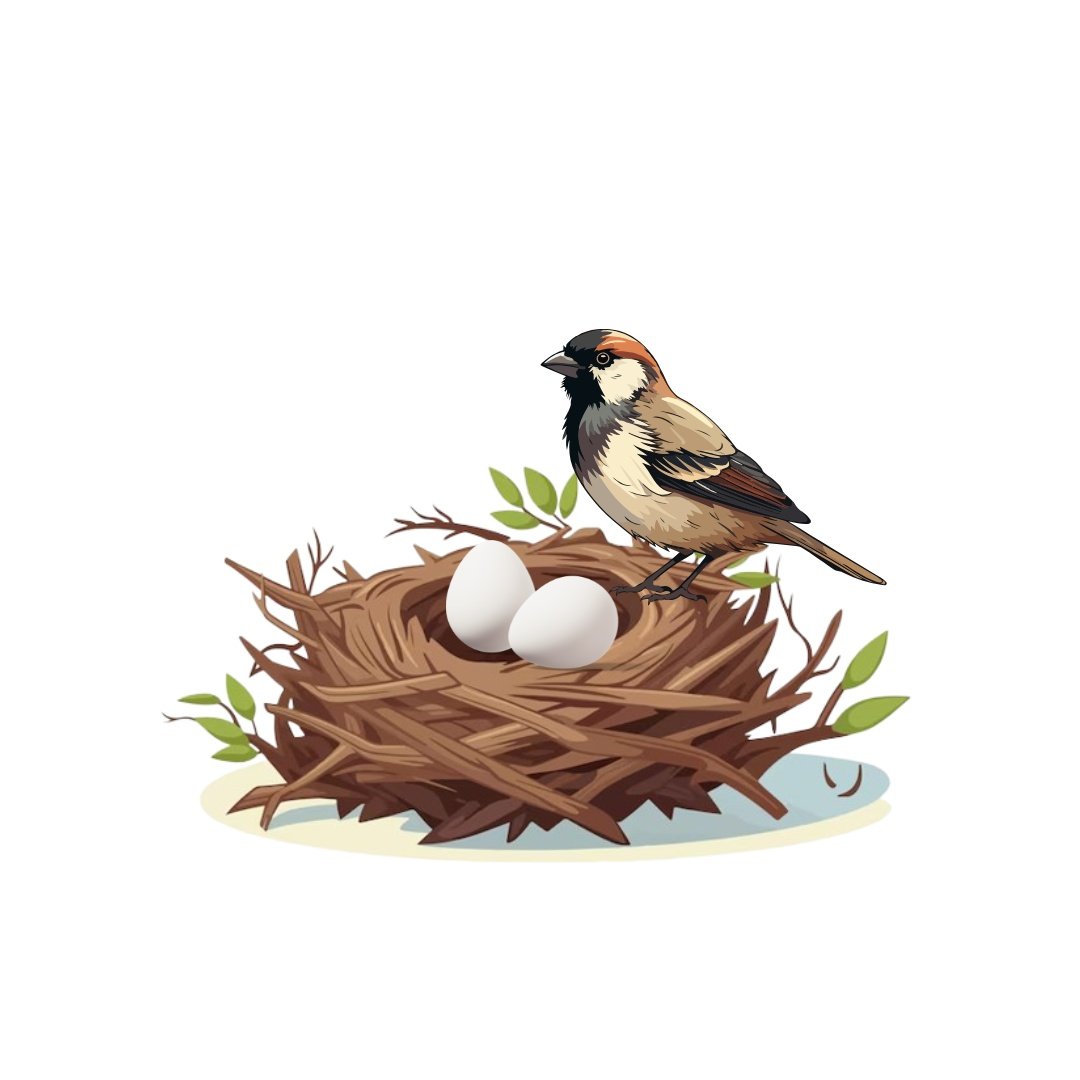
Sparrow

About Sparrow

In Indian culture, the sparrow is much more than just a small bird — it is a symbol of simplicity, harmony, and domestic well-being. Traditionally, sparrows nesting in homes were considered a sign of good fortune and prosperity. Their chirping was believed to bring positivity and peace to households. In many rural Indian communities, sparrows are seen as gentle companions of human life, closely linked to daily living and agriculture.

Farmers often associated their presence with a balanced ecosystem, as sparrows feed on crop pests, supporting natural farming methods. Folklore and old sayings often refer to sparrows as messengers of happiness and indicators of seasonal changes. In some regions, a sparrow building a nest in the home was thought to bless the family with good news or the birth of a child.

In recent times, the decline of sparrows in Indian cities has stirred emotional and cultural concern. Campaigns like World Sparrow Day (March 20) originated in India to raise awareness and reconnect people with this culturally cherished bird. The sparrow thus remains a symbol of the close bond between nature and Indian life, reminding us of our responsibility to protect traditional species and maintain ecological harmony.

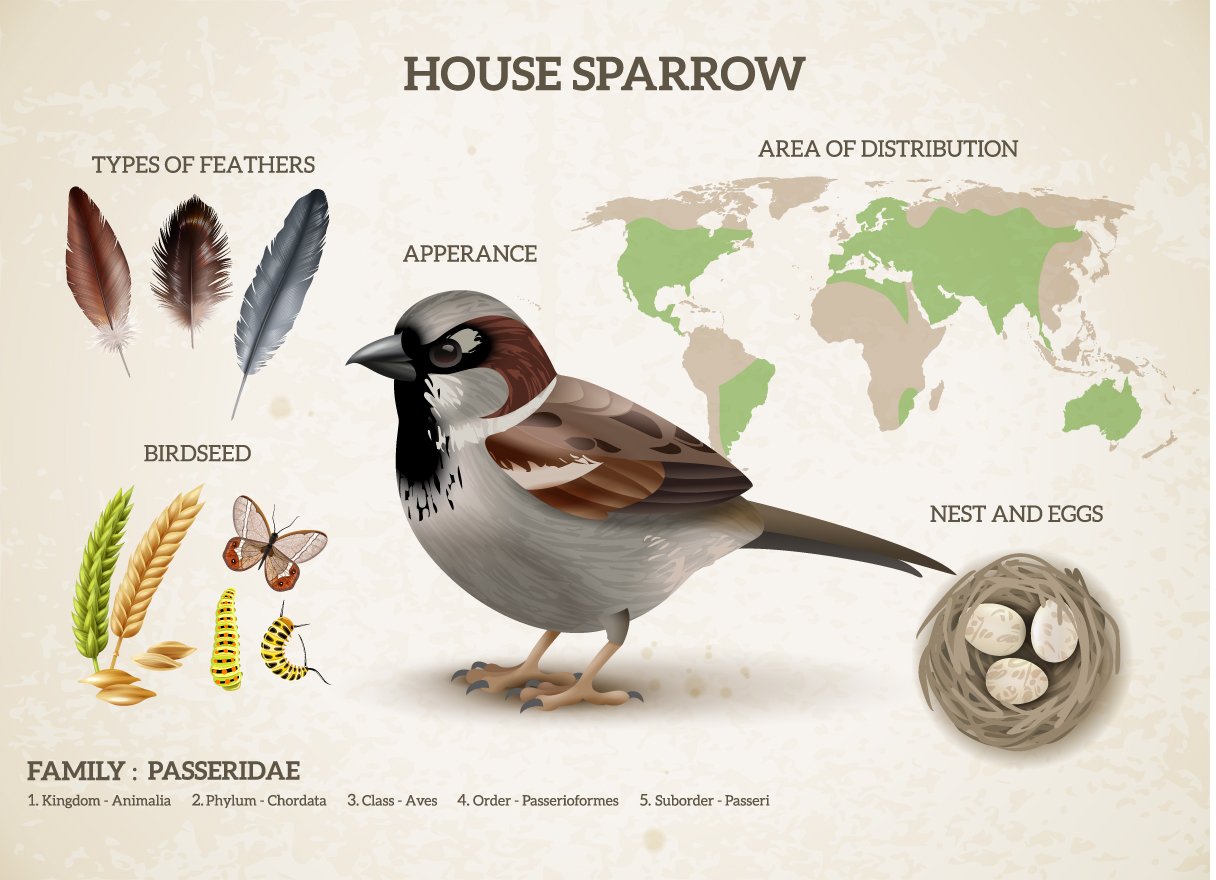
Scientific Classification

Kingdom: Animalia
Phylum: Chordata
Class: Aves
Order: Passeriformes
Family: Passeridae
Genus: Passer
Species: Passer domesticus
Physical Description
Length: 12-18 cm (4.7-7 inches)
Wingspan: 19-25 cm (7.5-10 inches)
Weight: 24-40 grams (0.8-1.4 ounces)
Body: Small, plump, and compact
Beak: Short, thick, cone-shaped
Feathers: Brown, gray, and white with streaks
Flight: Quick, fluttery, and agile
Tail: Short and square-tipped
Legs: Thin and strong, pinkish or grayish
Eyes: Dark, round, and alert-looking
Natural habitat
Urban Areas: Commonly found in cities, towns, and villages.
Farmlands: Thrives in agricultural settings, especially near grain fields.
Woodlands: Often found in forests, especially edge habitats near clearings.
Gardens and Parks: Frequent visitors in well-kept gardens, parks, and lawns.
Suburban Areas: Prefers areas with human habitation and food sources.
Nest Locations: Nests in cavities, tree branches, eaves of buildings, and even in dense shrubbery.
Climate: Adaptable to a variety of climates, but prefers temperate regions.
Global Distribution
Widespread: Found almost everywhere in the world.
Native Regions:Europe,Asia,North Africa
Introduced Species: North America: House sparrows were introduced from Europe in the 19th century and are now widespread.
Australia: Similarly, house sparrows were introduced and thrive.
Adaptability: Common in both rural and urban environments across temperate climates.
Absent in Some Regions: Rare in dense rainforests and remote areas like the Arctic or dense deserts.
Altitude Range: Found from sea level up to moderate altitudes (especially in temperate areas).
Life Cycle & Breeding
Kingdom: Animalia
Kingdom: Animalia
Kingdom: Animalia
Kingdom: Animalia
Kingdom: Animalia
Kingdom: Animalia